

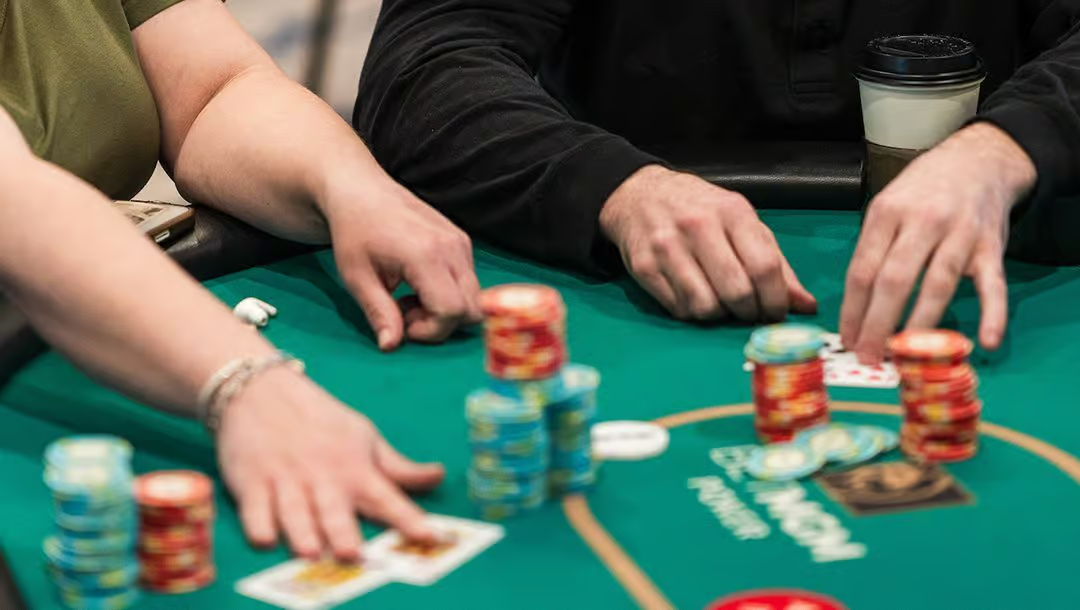
Transitioning from a full-ring poker table to a heads-up battle feels less like shifting gears and more like stepping onto a completely different racetrack. When the table shrinks to just two players, the entire dynamic of the game shifts dramatically. Hands that would be unplayable trash in a nine-handed game suddenly become premium holdings, and the frequency with which you must enter the pot skyrockets.
In a standard ring game, you can afford to sit back, drink coffee, and wait for pocket pairs or broadway cards. In heads-up poker, adopting that patient style is a recipe for a slow bleed. Because the blinds rotate every single hand, you are forced to post money on every cycle. If you fold too often, the relentless pressure of the small blind and big blind will decimate your stack before you even realize what happened. Mastering heads-up play requires an aggressive overhaul of how you construct, defend, and adjust your ranges.
The Reality of Preflop Range Expansion
In full-ring no-limit Texas hold’em, opening ranges from early position are tight, often hovering around fifteen to twenty percent of hands. You are looking for high-tier connectors, strong pocket pairs, and dominant ace-x combinations. As you move closer to the button, that range widens, but even on the button, you are typically playing roughly forty percent of hands in a standard game.
In a heads-up match, the button is also the small blind, and you are entering the pot first on every single postflop street. More importantly, you are playing against exactly one opponent. This mathematical reality changes everything. With only two players at the table, the value of individual starting cards increases exponentially.
If you are opening from the button in a heads-up game, folding seventy percent of your hands means you are leaving immense amounts of money on the table. Winning players routinely open between seventy-five and one hundred percent of their hands from the button. This expansion does not mean you are playing every single hand with the expectation of flopping the nuts. Rather, it means you are leveraging positional advantage and forcing your opponent to make difficult decisions out of position with marginal holdings.
Adapting to the Small Blind Open
When you are first to act preflop, your standard open-raise size should generally shrink compared to full-ring games. While a three-times big blind raise might be standard in a deep-stacked tournament early phase, heads-up play favors smaller sizing, typically between two and 2.5 times the big blind. This smaller sizing accomplishes two critical goals:
-
It risks fewer chips when your hand fails to connect with the board.
-
It offers your opponent worse pot odds to defend, forcing them to call with a wider, weaker range that you can exploit postflop.
Your opening range from the small blind should include virtually all suited connectors, most king-x and queen-x combinations, any suited ace, and a vast majority of offsuit aces and kings. Even trash hands like seven-four offsuit find a profitable spot in a heads-up opening range occasionally, provided your opponent is folding too frequently to preflop aggression.
Defending the Big Blind: Fighting Back Against Aggression
Being out of position in poker is universally challenging, but in heads-up play, defending your big blind is your primary line of defense. If you simply fold every time your opponent min-raises from the button, you are giving them an automatic profit on every single hand.
To prevent yourself from getting run over, you must develop a robust defense strategy that incorporates both calling and three-betting.
The Three-Betting Dynamic
In heads-up poker, a three-bet is not reserved exclusively for pocket aces and kings. If you limit your three-betting range to premium hands, your opponent will quickly catch on, fold their weak opens, and punish you whenever you flat-call.
Instead, your three-betting strategy needs to be polarized. You want to include your value hands—top-tier pairs and strong broadways—alongside a selection of strategic bluffing candidates. Ideal bluffing candidates in a heads-up three-betting range include blockers and semi-suited connectors, such as unsuited wheel aces (A-2 through A-5) or suited gappers. These hands retain good playability and remove combinations of strong hands from your opponent’s continuing range.
When facing a standard button open, your calling range should remain wide, encompassing medium-strength pocket pairs, suited aces, suited broadways, and connected cards that can flop disguised two-pair or straight draws. The key is ensuring your opponent cannot easily categorize your hand based on your preflop action alone.
Navigating Postflop Adjustments with Wide Ranges
Because both players are entering the flop with significantly wider ranges than in full-ring poker, the texture of the board takes on a completely different meaning. In a nine-handed game, a flop of Jack-seven-two rainbow heavily favors the preflop raiser who represents big pocket pairs. In a heads-up game, that same flop hits a massive portion of the big blind defender’s wide calling range.
Understanding Board Coverage
Board coverage refers to how well a particular flop connects with your overall range compared to your opponent’s range. When you play heads-up, you must become comfortable playing low cards, disconnected boards, and wet textures where top pair is no longer a goldmine.
-
Dry, High-Card Boards: Flops like King-eight-two rainbow heavily favor the aggressor. Here, you can continuation-bet at a high frequency with a small sizing, as your opponent’s big blind defense range will miss these textures more often than not.
-
Connected, Low Boards: Textures like Nine-eight-six with multiple flush draws require caution. Your opponent’s wide defense range is flooded with straight draws, two pairs, and sets. Continuing blindly on these boards will drain your stack quickly; check-folding or utilizing selective floating becomes mandatory.
The Value of Floating and Probing
Because ranges are wide, missed flops are the norm rather than the exception. If you open from the button, get called by the big blind, and fire a continuation-bet on a board like Ten-six-two, your opponent knows that you miss this flop a vast majority of the time.
Observant opponents will start floating—calling your continuation-bet with nothing—intending to steal the pot on the turn when you check. To counter this, your postflop strategy must incorporate turn probing and delayed continuation-betting. Do not feel obligated to continuation-bet every single flop just because you were the preflop aggressor. Checking back marginal holdings can control pot size, protect your checking range, and induce mistakes from opponents who try to run you over on later streets.
Psychological Adaptation and Stack Depth Management
Heads-up poker is an intense psychological battle. Without the buffer of other players at the table, every action feels personal. You and your opponent are locked in a continuous loop of adaptation and counter-adaptation. If you notice your opponent folding too much to river bets, you must increase your bluffing frequency. Conversely, if they start calling light, you must immediately shut down your bluffs and extract maximum value with your strong holdings.
Stack depth also dictates your strategy. In deep-stacked cash games, implied odds and postflop maneuvering dictate the action, making suited connectors and small pocket pairs highly valuable. In shallow-stack tournament heads-up scenarios, high card strength, blockers, and preflop all-in equity take precedence over speculative hands. Adjusting your preflop aggression and postflop bet sizing according to your effective stack size ensures you do not bleed chips in spots where implied odds no longer apply.
Ultimately, winning at heads-up poker is about embracing discomfort. You will play more marginal hands, face more difficult river decisions, and experience wider swings than in any other poker format. By expanding your opening ranges, defending your big blind aggressively, and paying close attention to board coverage, you can transform heads-up play from an intimidating challenge into one of the most profitable disciplines in your poker repertoire.

Comments are closed.