

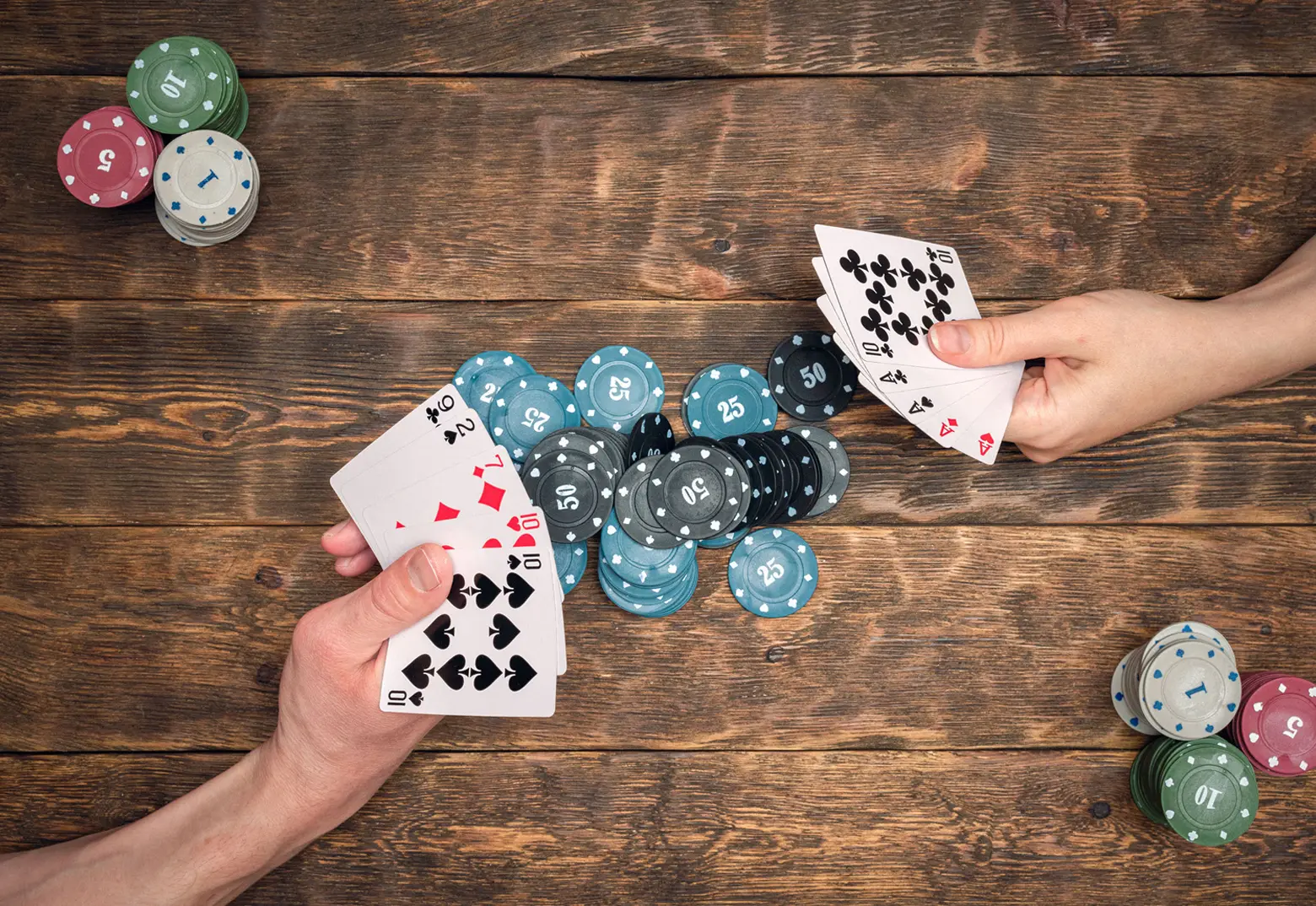
Understanding Poker and Its Enduring Appeal
Poker is not merely a card game; it is a complex interplay of mathematics, psychology, and strategic thinking. What makes poker truly captivating is that it mirrors real-life decision-making under uncertainty. Each hand requires balancing logic, risk, and emotion, making poker both an art and a science.
In the United States, poker has evolved from smoky backroom tables into a respected and regulated mind sport. With televised tournaments, online platforms, and global competitions, it has become a cultural and economic phenomenon. The game’s versatility, strategic depth, and psychological challenge make it one of the most intellectually stimulating forms of betting ever created.
The Foundations of Poker
At its core, poker is a game of incomplete information. Players make decisions based on partial knowledge, interpreting patterns and behaviors to form predictions about opponents’ hands. The central objective is to win chips or money by either holding the best hand or persuading others to fold through effective bluffing and strategic play.
The game has multiple variants, each with distinct rules and dynamics. The most popular forms include:
- Texas Hold’em: Players receive two private cards and use five community cards to form the best hand.
- Omaha: Similar to Hold’em but with four hole cards and stricter hand requirements.
- Seven-Card Stud: Players receive a mix of face-up and face-down cards, with no community cards.
- Draw Poker: Players can exchange cards to improve their hand during the game.
While each version has its nuances, the fundamental principles of hand ranking, probability, and strategy remain consistent across all.
The Mathematics of Poker
One of the most critical aspects of poker is probability. Understanding pot odds, expected value, and equity separates casual players from professionals. Poker rewards analytical thinking and calculated risk-taking rather than blind luck.
Key Mathematical Concepts in Poker
- Pot Odds: The ratio between the current pot size and the cost of a contemplated call. If the probability of completing your hand is greater than the pot odds, calling is mathematically justified.
- Implied Odds: The potential future winnings if a hand improves, providing a broader perspective on profitability.
- Expected Value (EV): A measure of the average outcome of a decision over time. Positive EV actions generate profit in the long run.
- Outs and Percentages: An “out” is any card that can improve a hand. Calculating the probability of hitting an out helps guide decisions at each stage.
For instance, in Texas Hold’em, if a player holds four cards to a flush with one card remaining, they have nine outs. The probability of hitting the flush is approximately 19.1%. Knowing such odds helps guide when to bet, call, or fold.
The Role of Psychology in Poker
While poker involves mathematics, psychology often determines the winner. Reading opponents, maintaining composure, and disguising intent are as essential as understanding the odds.
Psychological Dynamics in Poker
- The Bluff: Bluffing is the art of making others believe you have a stronger or weaker hand than reality. It’s an essential weapon in any poker strategy, used to manipulate opponents’ behavior.
- Tilt Management: “Tilt” describes emotional frustration after losing a big hand or making a mistake. Controlling tilt is crucial to maintaining rational decision-making.
- Table Image: How other players perceive you affects how they respond. A tight, cautious player gets more respect for bluffs, while an aggressive player often gets called more frequently.
- Reading Tells: Subtle physical or behavioral cues can reveal information. In online poker, these tells manifest as betting patterns, timing, and frequency of actions.
The best players combine logic with psychological insight, adapting their behavior to exploit opponents’ weaknesses while minimizing their own.
Strategic Depth: Building a Winning Poker Framework
Becoming a strong poker player requires mastering multiple layers of strategy. Each decision must consider mathematical reasoning, psychological context, and game theory principles.
1. Position Awareness
Position is one of the most influential factors in poker. Acting later in a hand provides a strategic advantage because you gain more information from others’ actions. Early-position players must play tighter, while late-position players can afford to be more aggressive.
2. Starting Hand Selection
Discipline in choosing which hands to play sets professionals apart from amateurs. Not every hand is worth entering the pot. Premium hands like A-A, K-K, and Q-Q should be played aggressively, while marginal hands require caution.
3. Pot Control and Bet Sizing
Bet sizing communicates information and influences opponent decisions. Effective bet sizing helps control the pot, protect vulnerable hands, and extract maximum value from strong ones. Too large a bet may scare opponents away, while too small a bet fails to protect against draws.
4. Bluffing and Semi-Bluffing
Bluffing strategically is vital, but overuse makes it predictable. Semi-bluffing—betting with a drawing hand that may improve—adds a layer of complexity, allowing for multiple paths to victory.
5. Adjusting to Opponents
Adaptive play is key. Tight players require patience and traps, while aggressive players can be countered with well-timed calls and re-raises. Identifying tendencies and adjusting strategies accordingly maximizes profit opportunities.
Online Poker and Technological Influence
The digital era has redefined poker. Online platforms provide accessibility, data analytics, and the ability to play multiple tables simultaneously. This technological evolution has produced a new generation of players who rely on advanced software for tracking, hand history analysis, and probability computation.
Artificial intelligence has further influenced poker by modeling optimal play strategies. AI systems such as reinforcement learning algorithms simulate millions of hands to identify patterns beyond human intuition. As a result, today’s professional players study using AI-generated models to refine decision-making and understand Game Theory Optimal (GTO) strategies.
Poker as a Professional Career
Poker has transitioned from a pastime to a full-fledged profession. Top professionals combine mathematical rigor, emotional control, and extensive study to achieve consistent results. The journey to becoming a professional poker player requires dedication, bankroll management, and a deep understanding of human behavior.
Essential Skills for Professional Poker Success
- Analytical Thinking: The ability to interpret data, track tendencies, and make probability-based decisions.
- Bankroll Management: Professionals allocate specific funds for poker and never risk more than a defined percentage in a single game.
- Mental Resilience: The variance in poker can be brutal. Emotional stability is essential to withstand losing streaks without deviating from sound strategy.
- Discipline and Patience: Successful players fold far more hands than they play. The discipline to wait for favorable situations defines long-term winners.
The Economic and Cultural Impact of Poker
Poker has a major cultural footprint in the United States. Televised tournaments and celebrity players have elevated its visibility, while the online sector contributes billions to the global economy. Poker tournaments draw players from around the world, fostering international camaraderie and competition.
Economically, poker generates revenue through tourism, casino activity, licensing, and taxation. The popularity of poker has also spurred advancements in digital security, algorithmic modeling, and behavioral analytics.
The Ethics and Responsibility in Poker
Despite its intellectual appeal, poker demands ethical responsibility. While skill plays a central role, it involves real money and inherent risk. Responsible gaming principles should always guide participation.
Responsible Poker Practices
- Set time and spending limits before playing.
- Recognize signs of compulsive play or emotional distress.
- Take breaks to maintain focus and emotional control.
- Treat poker as a skill-based challenge, not a guaranteed source of income.
Professional players also uphold ethics by promoting fairness, avoiding collusion, and fostering integrity within the community.
The Future of Poker
The future of poker lies in its fusion with technology and data science. AI-driven insights, blockchain-based transparency, and immersive virtual environments are shaping the next generation of play. Poker education is becoming more accessible, with players learning through online academies, simulation software, and real-time analytics tools.
As global acceptance grows, poker continues to strengthen its reputation as a legitimate, skill-based competition rather than pure gambling. This shift toward recognition and regulation ensures sustainability for future generations of players.
FAQs About Poker
Q1. Is poker more about skill or luck?
Poker combines both, but skill dominates in the long run. Luck may affect short-term outcomes, but strategic thinking, probability analysis, and emotional control determine consistent success.
Q2. What is Game Theory Optimal (GTO) play in poker?
GTO refers to a balanced strategy where a player’s actions cannot be exploited by opponents. It’s based on mathematical equilibrium and minimizes losses against any strategy.
Q3. How important is bluffing in poker?
Bluffing is crucial but must be applied selectively. Successful bluffing relies on timing, opponent observation, and the overall context of the hand.
Q4. What is variance in poker?
Variance measures the degree of fluctuation in results due to chance. Even skilled players experience losing streaks, but consistent decision-making mitigates long-term risk.
Q5. Can poker be a full-time profession?
Yes, many players earn a living from poker. However, it requires discipline, financial management, and extensive knowledge of both strategy and psychology.

Comments are closed.